You're ranking high on Google. So why isn't AI recommending you?
Being found and being recommended aren't the same thing anymore.
A different way to think about AI optimization
A lot of business owners hear "AI optimization" and assume it's just SEO with a rebrand. It's not, and that misunderstanding is quietly costing businesses customers they don't even know they're losing. Here's what's actually going on, and a few myths worth clearing up.
Myth 1: "I rank well on Google, so I'm fine"
Ranking well in traditional search results and getting recommended in an AI-generated answer are two different things, pulling from two different processes. Traditional search ranks pages. AI systems summarize and recommend based on how clearly a business explains what it does, how consistent that information is across the web, and how easily the AI can trust and cite it.
A business can sit at the top of Google's results and still get skipped entirely when someone asks an AI assistant the same question. It's not a smaller version of the same game. It's a different game running at the same time.
Myth 2: "AI optimization is just SEO with a new name"
They overlap, but they're not the same thing. Traditional SEO cares a lot about keywords, backlinks, and page authority. AI systems care more about clarity, structure, and whether your information is consistent everywhere it appears, your website, your listings, your reviews, your social pages.
If your business hours are wrong on one site and right on another, a search engine might not notice. An AI system pulling information together to answer a question is far more likely to get confused, and a confused AI system tends to leave you out of the answer rather than guess.
Myth 3: "This is a trend that'll blow over"
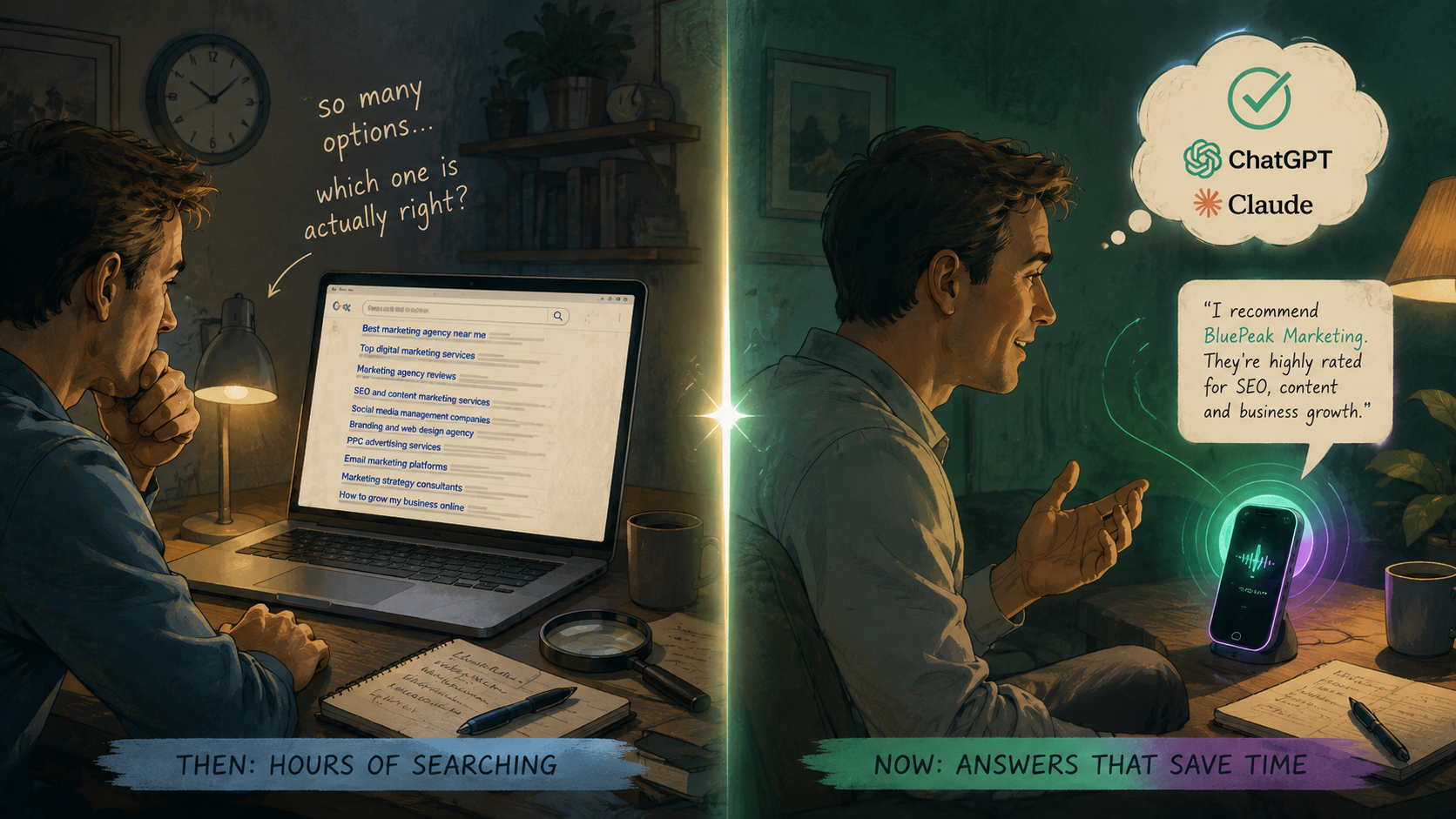
Search behavior has already shifted, and it's not sliding back. More people are asking AI assistants and AI-generated summaries for recommendations before they ever click through to a website. That's not a temporary spike, it's becoming the normal way people look for local businesses, service providers, and everyday recommendations.
Businesses that wait to see if this "settles down" are choosing to be invisible in a channel that's only going to matter more, not less.
So what actually moves the needle?
It comes down to a few things done consistently, not a single trick:
Being clear about what you do, in plain language, in more than one place online.
Keeping your business information the same everywhere it appears, your website, your listings, your social profiles.
Structuring your content so it directly answers the questions people are actually asking, instead of burying the answer in a paragraph built for search engines from five years ago.
Staying current, since AI systems tend to favor information that's fresh and actively maintained over something that hasn't been touched in a year.
None of that is a secret formula. It's just work that most businesses haven't gotten around to yet, which is exactly why the ones who do it now have an easier time getting noticed.
Ready to actually be the answer, not just a link?
If you're already investing in getting found, it's worth making sure you're set up for how people are searching now, not just how they searched five years ago.